Bull Terrier
The Gladiator in a Clown Suit
The Gladiator in a Clown Suit
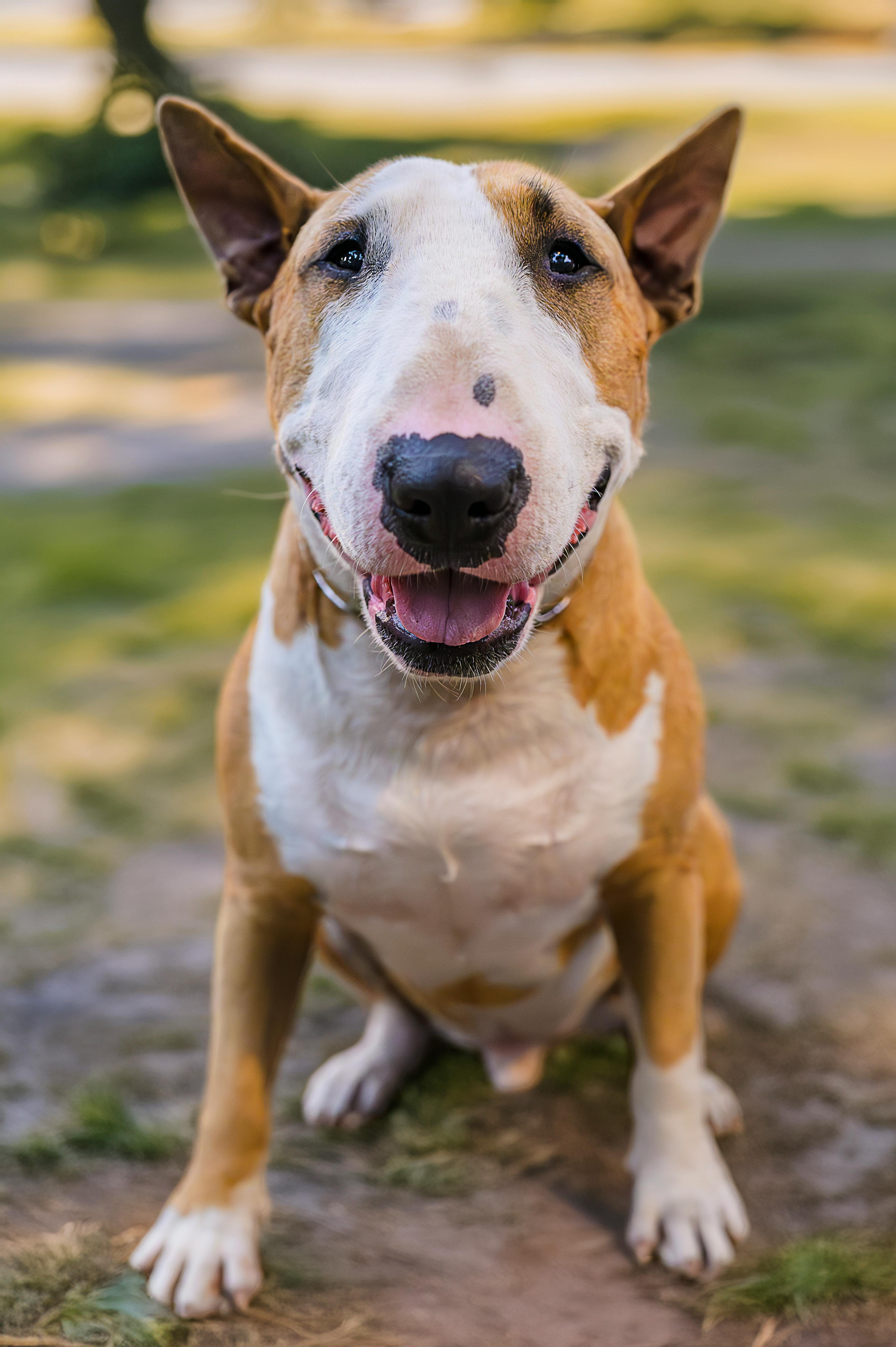
The Bull Terrier is instantly recognizable — that distinctive egg-shaped head, small triangular eyes, and muscular build create a profile unlike any other breed. But beneath that unique appearance beats the heart of a comedian, a loyal companion, and an exuberant personality who approaches life with gusto. They're tough and tenacious when needed but remarkably gentle and affectionate with their families. Think of them as gladiators in clown suits: powerful, determined, and endlessly entertaining.
From Fighting Rings to Family Homes
The Bull Terrier emerged in mid-19th century England, developed by crossing Bulldogs (used for bull-baiting) with various terriers to create dogs for blood sports including bull-baiting and later dog fighting. A man named James Hinks of Birmingham is credited with refining the breed in the 1850s, crossing the earlier "Bull and Terrier" dogs with white English Terriers and possibly Dalmatians.
Hinks created the distinctive white Bull Terrier, initially called the "White Cavalier," known for their refined head, more elegant build, and gentler temperament compared to their fighting ancestors. These dogs became fashionable companions for English gentlemen, representing a more civilized alternative to fighting dogs.
The colored variety was developed later by reintroducing colored ancestry to expand the genetic pool. Today, both white and colored Bull Terriers are recognized, with the only difference being coat color.
When blood sports were banned in England in 1835, Bull Terriers transitioned from fighting dogs to companions and show dogs. They arrived in the United States in the late 1800s and gained American Kennel Club recognition in 1885.
The breed's distinctive appearance has made them popular in advertising and media, though this visibility has sometimes led to ownership by people unprepared for their unique personality and needs.
"Not good with other dogs. Mine is happy being the only dog and we've made peace with it."
"That egg head and those little eyes — people either love them or find them weird."
"Loyal to a fault. Follows me everywhere and wants to be involved in everything."
For Experienced, Patient Owners
The Bull Terrier is not for everyone. They're stubborn, can be dog-aggressive, require substantial exercise and training, and need owners who appreciate their unique personality. They're unsuitable for first-time dog owners or those wanting easy obedience.
But for experienced owners who enjoy a challenge, appreciate independence and humor, and can provide consistent training and socialization, Bull Terriers are remarkable. They're devoted, entertaining, and unique in appearance and character.
If you want a dog who makes you laugh, keeps you on your toes, and offers unwavering loyalty despite their stubborn streak, a Bull Terrier might be your match. Just be prepared for the fact that they'll do things their way, on their terms, whenever possible. That's not defiance — that's just Bull Terrier.
The Bull Terrier is playful, energetic, and marches to the beat of their own drum. These dogs have huge personalities packed into their muscular frames. They're clownish, entertaining, and often engage in behaviors that seem calculated to make their humans laugh.
Bull Terriers bond intensely with their families and want to be involved in everything. They're not content to observe from the sidelines — they're active participants in family life who follow you everywhere and "help" with all activities, whether their help is wanted or not.
With proper socialization and training, Bull Terriers can be wonderful with children in their own families. They're patient, playful, and tolerant of childish antics. However, their strength, exuberance, and sometimes poor awareness of their own size mean supervision is essential. They can accidentally knock over small children in their enthusiasm.
Toward strangers, Bull Terriers are typically friendly, though they may be reserved initially. They make decent watchdogs who will alert you to visitors, though they're not aggressive protectors in the traditional sense.
With other dogs, Bull Terriers can be challenging. Their bull breed heritage gives them determination and sometimes dog-aggressive tendencies, particularly toward dogs of the same sex. Early, extensive socialization and ongoing management are essential. Many Bull Terrier owners find their dogs do best as the only dog in the household.
Their prey drive can be strong, making them unsuitable for homes with cats or small pets unless raised together from puppyhood.
Bull Terriers are famously stubborn. They're intelligent but see no reason to blindly obey — they need to understand what's in it for them. This independence makes them challenging to train and unsuitable for owners wanting automatic obedience.
A Unique and Powerful Build
The Bull Terrier is a medium-sized dog with a muscular, substantial build. They typically stand 21-22 inches at the shoulder, with weight proportionate to height, usually 50-70 pounds. They should be powerfully built without being bulky.
Their most distinctive feature is their unique head: egg-shaped when viewed from the front, with no stop (the indentation between forehead and muzzle found in most breeds). This creates their signature profile. Small, dark, triangular eyes are set close together and deeply recessed.
The coat is short, flat, and harsh to the touch, requiring minimal grooming. Bull Terriers come in two color varieties: white (pure white or white with colored markings on the head) and colored (any color other than white, or any color with white markings).
They're built like little tanks — solid, muscular, and low to the ground with a powerful chest and strong, sturdy legs.
Bull Terriers are energetic and require substantial daily exercise — at least one to two hours of vigorous activity. They need outlets for their considerable energy and strength, or they'll find destructive ways to entertain themselves.
They enjoy long walks, hikes, fetch games, and activities that challenge both body and mind. Many Bull Terriers excel at weight pulling, agility (though they may not have the intense drive of some breeds), and other dog sports.
These dogs are powerful and can pull strongly on leash, so leash training is essential from puppyhood. A securely fenced yard provides space for exercise, though fencing must be sturdy — Bull Terriers can be escape artists when motivated.
Mental stimulation is equally important. Bull Terriers are smart and need puzzle toys, training sessions, and activities that engage their problem-solving abilities.
Training a Bull Terrier requires patience, consistency, and a good sense of humor. These dogs are intelligent but stubborn, and they'll test boundaries regularly. They need confident handlers who can set clear rules and enforce them consistently.
Positive reinforcement works best — Bull Terriers respond to praise, treats, and play, though they're not as eager to please as some breeds. Training sessions should be short, varied, and engaging, as they bore easily with repetition.
Harsh corrections are counterproductive. Bull Terriers are sensitive beneath their tough exterior, and harsh treatment can make them shut down or become defensive. Firm, fair, and consistent works far better than forceful.
Early and extensive socialization is absolutely critical, particularly regarding other dogs. Exposure to many different dogs, people, and situations in positive contexts helps prevent aggression and fearfulness.
Recall training deserves special attention, as Bull Terriers can be stubborn about coming when called, especially if something more interesting has their attention.
The Bull Terrier's short coat is wonderfully low-maintenance. Weekly brushing with a rubber curry brush removes loose hair and keeps their coat shiny. They shed moderately year-round.
Bathing is needed only occasionally, as their coat stays fairly clean. Regular nail trimming, ear cleaning, and dental care complete the grooming routine.
White Bull Terriers may be more prone to skin sensitivities and sunburn, requiring sun protection if spending extended time outdoors.
12-13 years
Bull Terriers have a lifespan of 12-13 years and can be prone to certain health issues. Deafness (particularly in white Bull Terriers), kidney disease, heart disease, skin allergies, and luxating patella are breed concerns. Some Bull Terriers develop obsessive-compulsive behaviors including tail chasing and shadow chasing.
White Bull Terriers have higher rates of deafness than colored ones. Responsible breeders test puppies' hearing and screen breeding stock for genetic conditions.
Bull Terriers can be prone to obesity if overfed and under-exercised, which stresses joints and contributes to other health problems.