Boxer
Boundless Energy, Eternal Puppy, Devoted Clown
Boundless Energy, Eternal Puppy, Devoted Clown
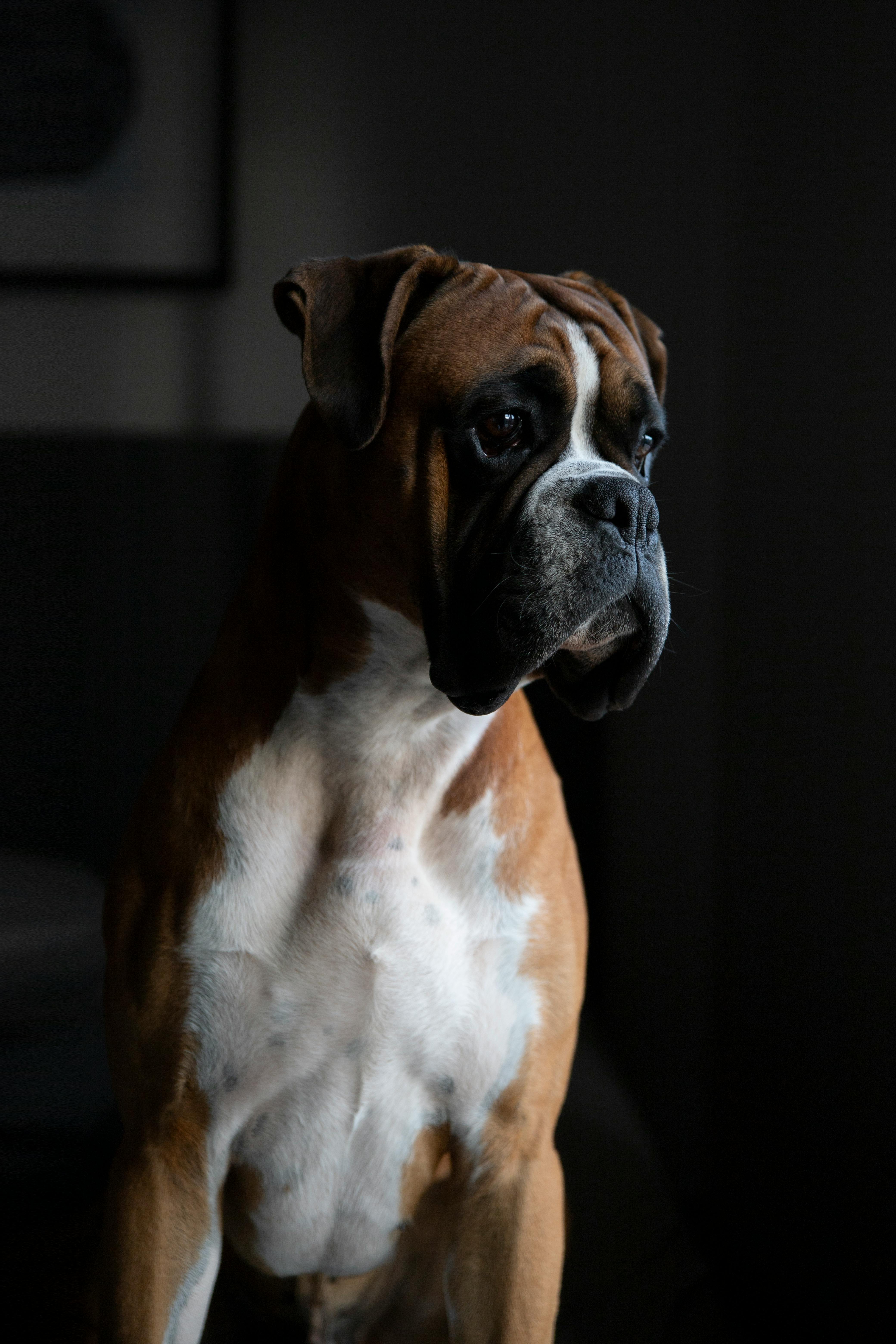
The Boxer is pure joy in canine form — a medium-to-large breed that never truly grows up, approaching life with enthusiasm, goofiness, and unshakeable devotion. With their muscular build, distinctive square head, and expressive face, Boxers look like serious working dogs. Then they start moving — bouncing, wiggling, and "boxing" with their front paws — and you realize you're dealing with a perpetual comedian who just happens to be strong, athletic, and fiercely loyal.
The Boxer's roots trace to 19th-century Germany, where they descended from the now-extinct Bullenbeisser ("bull-biter"), a mastiff-type dog used for hunting large game like wild boar and deer. These dogs needed strength to hold prey until hunters arrived and courage to face dangerous animals.
As hunting large game declined, breeders in Munich worked to refine the Bullenbeisser into a more versatile dog. They crossed remaining Bullenbeissers with English Bulldogs, creating a smaller, more agile dog suitable for various tasks including guarding, herding, and companionship.
The modern Boxer was established in the 1890s when a group of Munich breeders founded the first Boxer club and developed the breed standard. The name "Boxer" likely comes from the breed's tendency to use their front paws during play, standing on hind legs and "boxing" with their front paws.
Boxers served in both World Wars as messenger dogs, pack carriers, and guard dogs. Returning soldiers brought them to the United States, where they quickly gained popularity. The American Kennel Club recognized the breed in 1904, and Boxers became one of America's favorite breeds.
Today, while some Boxers still work in police and military roles, most are beloved family companions who excel at making their humans laugh while providing devoted companionship and natural protection.
The Boxer is exuberant, affectionate, and famously slow to mature mentally. They remain puppyish well into their third or fourth year, maintaining their playful, goofy nature throughout life. This eternal youth is endearing but requires patience during their extended adolescence.
These dogs are profoundly people-oriented and bond intensely with their families. Boxers aren't just companions — they're involved family members who want to participate in everything. They follow you from room to room, "help" with chores, and believe they should be included in all activities.
Boxers are remarkably gentle and patient with children in their own families. They seem to understand they need to be careful with small kids and will tolerate enormous amounts of poking, prodding, and petting. Their playful nature makes them wonderful playmates for active children, though supervision is necessary given their size and enthusiasm.
With strangers, Boxers are typically friendly once they determine there's no threat, though they maintain a natural wariness and protective instinct toward their family. They make excellent watchdogs who will alert you to anything unusual and position themselves between their family and potential threats.
Their intelligence is sometimes underestimated due to their clownish behavior. Boxers are actually quite smart, though they use that intelligence to entertain as much as to obey. They have minds of their own and can be stubborn, preferring to make you laugh rather than follow commands perfectly.
The "kidney bean dance" is a Boxer specialty — when excited (which is often), they curve their body into a semi-circle and wiggle frantically, creating a shape like a kidney bean. This full-body wiggle, combined with their nubby tail wagging furiously, is pure Boxer joy.
The Boxer is a medium-to-large dog with a square, muscular build. Males typically stand 23-25 inches at the shoulder and weigh 65-80 pounds, while females are 21.5-23.5 inches and 50-65 pounds. They're powerful and athletic without being bulky, built for strength, agility, and endurance.
Their most distinctive feature is their head: broad, square, with a short muzzle and strong underbite. The dark brown eyes convey intelligence and expressiveness, and their alert expression captures their attentive, ready-for-anything nature.
Boxers' ears are naturally floppy, though in some countries they're still cropped to stand erect. Their tail is naturally long but was traditionally docked very short, though this practice is banned in many countries and becoming less common in the United States.
The coat is short, shiny, and tight-fitting, coming in two main colors: fawn (ranging from light tan to rich mahogany) and brindle (fawn with black stripes). Both colors typically feature white markings on the chest, face, and paws. Some Boxers are predominantly white, though these aren't accepted in the show ring and may have higher rates of deafness.
21-25 in
50-80 lbs
10-12 years
Boxers are high-energy dogs that require significant daily exercise — at least one to two hours of vigorous activity. A walk around the block won't cut it; they need opportunities to run, play, and burn off their considerable energy.
They excel at activities that combine physical and mental challenges: agility, obedience, rally, and dock diving are all excellent outlets. Many Boxers love to play fetch obsessively and can retrieve until you give up long before they do.
Without adequate exercise, Boxers become destructive, hyperactive, and difficult to manage. A bored Boxer will find creative ways to entertain themselves — digging, chewing, and general mayhem are common expressions of pent-up energy.
As a brachycephalic (short-muzzled) breed, Boxers are sensitive to heat and can have breathing difficulties during intense exercise in warm weather. Exercise should be scheduled during cooler parts of the day, and they should never be overexerted in heat or humidity.
Boxers are intelligent and trainable, though they require patience and a sense of humor. They respond beautifully to positive reinforcement — praise, treats, and play motivate them far more than harsh corrections. Their sensitive nature means they can become sulky or shut down if treated harshly.
Consistency is crucial, as Boxers will test boundaries regularly, especially during their extended adolescence. They're smart enough to know when you're not paying attention and will exploit any inconsistency.
Keep training sessions engaging and varied. Boxers bore easily with repetitive drills and need mental stimulation to stay focused. They learn quickly but may choose whether to comply based on what's in it for them.
Early socialization is important to ensure their protective instinct develops appropriately. Exposure to various people, animals, and experiences builds confidence and prevents fearfulness or excessive suspicion.
Impulse control training deserves special attention. Boxers are enthusiastic greeters who jump, wiggle, and bowl people over in their excitement. Teaching calm greetings and patience requires consistent practice.
The Boxer's short coat is wonderfully low-maintenance. Weekly brushing removes loose hair and keeps their coat shiny. They shed moderately year-round with slightly heavier periods seasonally.
Bathing is needed only occasionally, as their coat stays fairly clean. Their facial wrinkles should be cleaned regularly to prevent skin irritation and infection.
Regular nail trimming, ear cleaning, and dental care complete the routine. Many Boxers drool, particularly when hot, excited, or after drinking, so keeping towels handy is practical.
10-12 years
Boxers have a lifespan of 10-12 years and can be prone to certain health issues. Cancer (particularly mast cell tumors, lymphoma, and brain tumors) is unfortunately common in the breed. Heart conditions including boxer cardiomyopathy and aortic stenosis, hip dysplasia, hypothyroidism, and brachycephalic airway syndrome are other concerns.
The breed's cancer susceptibility is heartbreaking, and prospective owners should be aware of this reality. Responsible breeders screen for genetic conditions and provide health clearances.
Boxers' short muzzles make them prone to overheating and breathing difficulties. They should never be left in hot cars or exercised excessively in warm weather.
Boxers may be predisposed to the following health conditions. Click on any condition to learn more about symptoms, treatment, and prevention.
Digestive
Pet parents, listen up. This is one of the most serious and terrifying conditions that can affect a dog: Bloat, also...
Prevalence: Occasional
Cardiovascular
Hello, wonderful puppy parents! Bringing home a new puppy is one of the most joyful experiences. During one of your...
Prevalence: Common
Endocrine
Hey there, pet parents. Today we're going to talk about another common hormonal disease in older dogs, one that can...
Prevalence: Common
Neurological
Hey there, pet parents. Today we have to talk about a tough one. It's a heartbreaking and progressive disease of the...
Prevalence: Common
Cardiovascular
Hello, wonderful pet parents. Today, we're going to discuss a serious heart condition that primarily affects our...
Prevalence: Common
Digestive
Hey there, pet parents. If your dog seems to be plagued by chronic vomiting, diarrhea, or a poor appetite, you might...
Prevalence: Common
Cancer
Hey there, pet parents. A diagnosis of cancer is always scary, but it's important to know that not all cancers are...
Prevalence: Common
Cancer
Hey there, pet parents. Today we're going to talk about the most common type of skin cancer in dogs: the Mast Cell...
Prevalence: Very Common