Boston Terrier
The American Gentleman with a Lively Spirit
The American Gentleman with a Lively Spirit
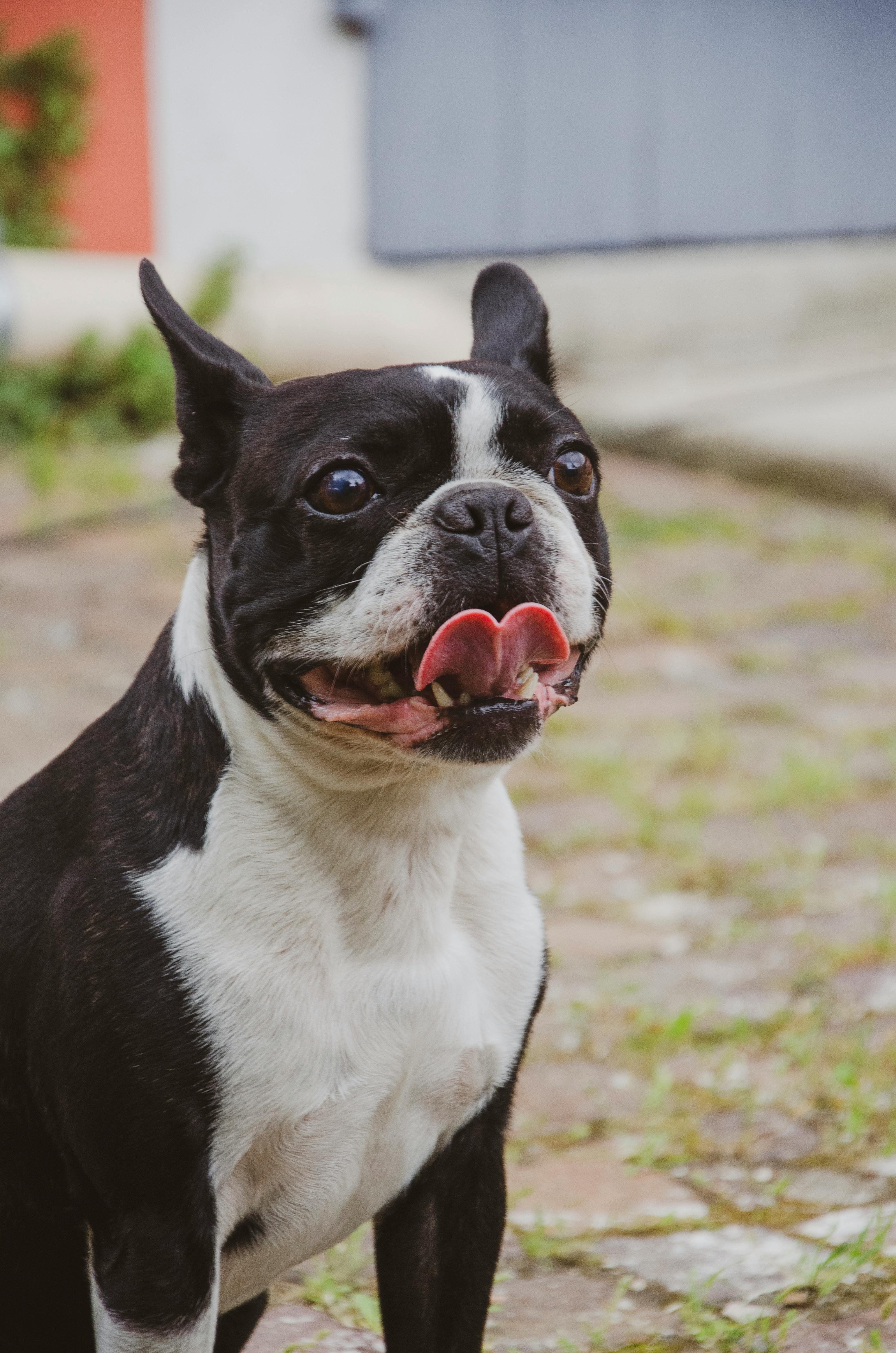
The Boston Terrier is charm personified — a compact, tuxedo-clad companion with oversized personality packed into a small, muscular frame. Nicknamed "The American Gentleman" for their distinctive black and white markings that resemble formal wear, these dogs combine friendly enthusiasm with a dignified demeanor. They're one of the few breeds truly developed in America, and they carry that democratic spirit: equally at home in city apartments or country houses, content with active families or elderly companions.
A Truly American Creation
The Boston Terrier is one of the few breeds that can claim American origins, specifically beginning in Boston, Massachusetts in the late 1860s. The breed's foundation came from crossing English Bulldogs with the now-extinct white English Terrier, along with some French Bulldog influence.
The original ancestor was a dog named Judge, owned by Robert C. Hooper. Judge was bred to a small white female named Burnett's Gyp, and their descendants were selectively bred to create a smaller, more refined companion dog. Early breeders in the Boston area refined the breed, reducing size while maintaining the sturdy build and friendly temperament.
Originally called "Round Heads" or "Bull Terriers," the name was changed to Boston Terrier to honor the breed's birthplace. The American Kennel Club recognized the breed in 1893, making it one of the first American breeds to achieve recognition.
The Boston Terrier quickly became immensely popular in the United States, particularly in the early 20th century. They were fashionable companions for the upper classes and became the official mascot of Boston University. Their popularity spread worldwide, and they remain beloved companions today.
Friendly, Lively, and Endlessly Entertaining
The Boston Terrier is friendly, intelligent, and brimming with personality. These dogs are people-oriented and thrive on companionship. They're affectionate without being clingy, playful without being hyperactive, and dignified without being aloof — a perfect balance that makes them adaptable to various lifestyles.
Boston Terriers are remarkably sensitive to their owner's moods and make excellent companions for people seeking emotional connection with their dog. They read facial expressions and body language well, often seeming to understand exactly what you're feeling.
These dogs are generally friendly toward strangers, other dogs, and pets when properly socialized. Their terrier heritage gives them spirit and determination, but they're not typically aggressive or quarrelsome. They make decent watchdogs who will alert you to visitors but aren't excessive barkers.
With children, Boston Terriers are typically wonderful. Their sturdy build, playful nature, and patience make them ideal for families. They enjoy games and activities with kids while tolerating the chaos of family life with good humor.
Boston Terriers are known for being somewhat stubborn at times — they have opinions and aren't afraid to express them. However, their intelligence and desire to please usually win out, making them generally easy to train with the right approach.
Many Bostons are comedians who seem to enjoy making their families laugh. They develop amusing habits and show off behaviors that earn attention and praise.
The Boston Terrier is a small but substantial dog, standing 15-17 inches at the shoulder. They're divided into three weight classes: under 15 pounds, 15-19 pounds, and 20-25 pounds. All should be compact, well-balanced, and muscular.
Their most distinctive feature is their tuxedo-like coat pattern: predominantly black, brindle, or seal (appearing black with a red cast in bright light) with crisp white markings on the muzzle, between the eyes, chest, and partially on the legs. These markings give them their "American Gentleman" nickname.
Boston Terriers have a square, flat face with large, round, expressive eyes that convey intelligence and kindness. Their ears are naturally erect and carried upright, adding to their alert expression. The short, smooth coat lies close to their compact, muscular body.
Their short tail is set low and carried naturally — it may be straight or screw-shaped but should never be docked.
15-17 in
12-25 lbs
Smooth/Short
11-13 years
Boston Terriers have moderate exercise needs. A couple of short to moderate walks daily, combined with playtime, meets their physical requirements. They enjoy activities like fetch, tug-of-war, and interactive games but aren't marathon athletes.
These dogs adapt well to apartment living and city environments. Their small size and moderate energy make them suitable for various living situations, from urban apartments to suburban homes with yards.
In warm weather, exercise must be carefully managed. As a brachycephalic (flat-faced) breed, Boston Terriers are prone to overheating and breathing difficulties. Exercise should occur during cooler parts of the day, and they should never be left in hot cars or exerted in heat and humidity.
Similarly, their short coat provides little protection from cold weather. Many Boston Terriers benefit from sweaters or coats during winter walks.
Boston Terriers are intelligent and capable of learning quickly. They respond well to positive reinforcement training using treats, praise, and play as rewards. Harsh corrections are unnecessary and can damage their sensitive nature.
Consistency is important, as Bostons can be stubborn when they choose. They're smart enough to test boundaries and will happily ignore commands if there's no compelling reason to comply. Making training fun and rewarding ensures cooperation.
House training is usually straightforward, though consistency and patience are necessary as with any breed. Crate training provides them with a secure space and aids in house training.
Socialization is typically easy, as most Boston Terriers are naturally friendly. Exposure to various people, animals, and experiences builds confidence and ensures their sociable nature develops fully.
Some Boston Terriers can be possessive of toys or food, so teaching "leave it" and "drop it" commands early prevents resource guarding issues.
The Boston Terrier's short, smooth coat is wonderfully low-maintenance. Weekly brushing with a soft brush removes loose hair and keeps their coat shiny. They shed moderately year-round but aren't heavy shedders.
Bathing is needed only occasionally, as their coat stays fairly clean. Their facial wrinkles (if present) should be kept clean and dry to prevent skin irritation.
Regular nail trimming, ear cleaning, and dental care complete the grooming routine. Their large, prominent eyes should be checked regularly, as they're vulnerable to injury and may need occasional wiping to remove discharge.
11-13 years
Boston Terriers have a lifespan of 11-13 years and are generally healthy, though their brachycephalic structure creates some health concerns. Brachycephalic airway syndrome, which causes breathing difficulties, is common. Heat intolerance, eye problems (including cataracts, corneal ulcers, and cherry eye), patellar luxation, and deafness are other breed concerns.
Their prominent eyes make them vulnerable to injury from running into objects or playing roughly. Some Boston Terriers snore, snort, and wheeze due to their short muzzles — this is normal for the breed, though excessive breathing difficulty warrants veterinary attention.
Responsible breeders screen for genetic conditions and select breeding stock carefully to minimize health issues.
Boston Terriers may be predisposed to the following health conditions. Click on any condition to learn more about symptoms, treatment, and prevention.
Skin
Hey there, pet parents. Is your dog constantly scratching, licking, or chewing at their skin? Are they plagued by...
Prevalence: Common
Respiratory
Hello to all the proud parents of pugs, Frenchies, and bulldogs! We adore our flat-faced (brachycephalic) friends...
Prevalence: Common
Eye
Hey there, pet parents. Have you noticed your dog's eyes starting to look cloudy or bluish-gray? If so, you might be...
Prevalence: Common
Eye
Hey there, pet parents. Have you ever looked at your dog and seen a smooth, red, swollen lump popping out from the...
Prevalence: Common
Endocrine
Hey there, pet parents. Today we're going to talk about another common hormonal disease in older dogs, one that can...
Prevalence: Common
Eye
Hey there, pet parents. Today we need to talk about a true medical emergency of the eye: Glaucoma. Glaucoma is a...
Prevalence: Common
Cancer
Hey there, pet parents. Today we're going to talk about the most common type of skin cancer in dogs: the Mast Cell...
Prevalence: Very Common