Bloodhound
The Ultimate Tracking Machine with a Gentle Soul
The Ultimate Tracking Machine with a Gentle Soul
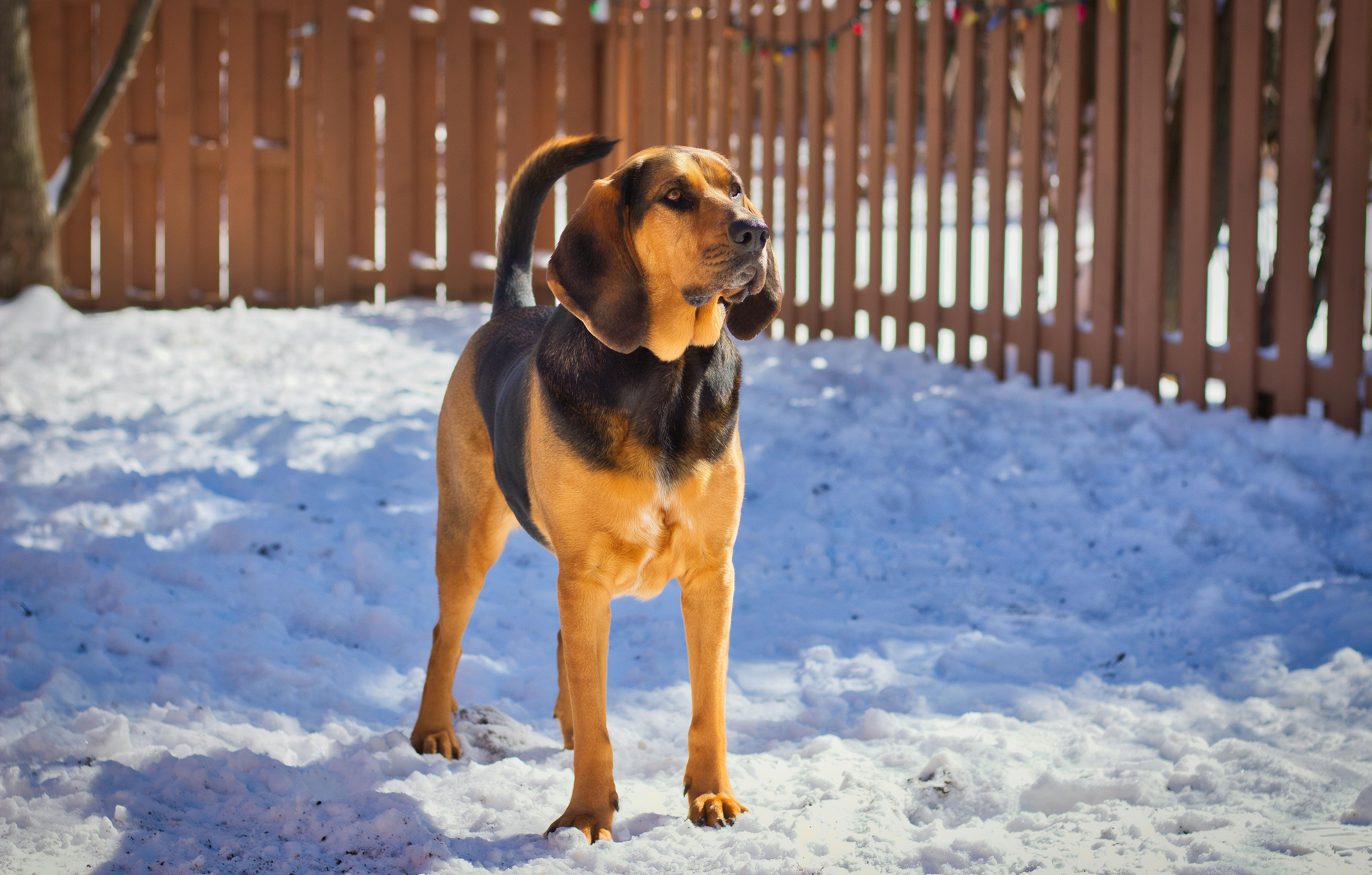
The Bloodhound is scent-detection incarnate — a dog so phenomenally gifted at following trails that their tracking evidence is admissible in courts of law. With their wrinkled face, drooping ears, and soulful expression, these noble hounds combine an unparalleled nose with a remarkably gentle, affectionate temperament. They're not just working dogs; they're sensitive, devoted companions who happen to possess the most powerful scenting ability in the canine world.
The Bloodhound's lineage traces back over a thousand years to medieval Europe, where they were developed by monks at the Abbey of Saint-Hubert in Belgium. These "St. Hubert Hounds" were bred for their exceptional scenting ability and stamina in tracking game.
The breed's name has nothing to do with tracking blood or being bloodthirsty. Rather, it refers to their status as "blooded hounds" — dogs of pure blood, carefully bred and pedigreed by nobility. Norman nobles brought these hounds to England after the 1066 conquest, where they were further refined.
For centuries, Bloodhounds tracked deer and wild boar for aristocratic hunters, but their most significant work came in tracking people. Their ability to follow a scent trail hours or even days old made them invaluable for locating missing persons, criminals, and escaped prisoners. In the American South, Bloodhounds were unfortunately used to track escaped slaves, a dark chapter that gave the breed an undeserved vicious reputation.
In reality, Bloodhounds are gentle and were used purely for their tracking ability, not aggression. Today, they work with police, search and rescue teams, and organizations dedicated to finding missing children and endangered adults. The breed's tracking abilities are so reliable that evidence from a Bloodhound trailing is admissible in court in many jurisdictions.
The American Kennel Club recognized the Bloodhound in 1885, and while not hugely popular as pets, they maintain a dedicated following among those who appreciate their unique abilities and gentle nature.
The Bloodhound is gentle, affectionate, and remarkably even-tempered. Despite their large size and formidable tracking abilities, they're among the most docile of breeds. They're patient with children, friendly toward strangers, and generally good with other dogs and household pets.
These dogs are devoted to their families and crave companionship. They're not aggressive or protective in the traditional watchdog sense — a Bloodhound might greet an intruder with enthusiastic tail wags and expect to be petted. Their size and deep, booming bark might deter strangers, but their actual temperament is friendly.
However, living with a Bloodhound comes with unique challenges. They're ruled entirely by their nose. When a Bloodhound picks up an interesting scent, nothing else exists — not your calls, not traffic, not common sense. This single-minded focus makes them both brilliant tracking dogs and challenging pets.
They're also notably stubborn. Bloodhounds are intelligent but independent thinkers who see little reason to obey commands when something interesting needs investigating. Training requires immense patience and a sense of humor.
Bloodhounds are vocal dogs with an impressive repertoire of sounds: deep baying, howling, and various grumbles and moans. This vocalization served hunters who needed to hear their dogs from a distance, but it can try the patience of neighbors.
They're also notable droolers — among the heaviest drooling breeds. Those loose jowls collect saliva that gets flung when they shake their heads, decorating walls, furniture, and unsuspecting visitors.
A Substantial, Purposeful Build
The Bloodhound is a large, powerfully built hound designed for endurance tracking over difficult terrain. Males typically stand 25-27 inches at the shoulder and weigh 90-110 pounds, while females are 23-25 inches and 80-100 pounds. Everything about their build serves their tracking purpose.
Their most distinctive features are their wrinkled skin and long, velvety ears. The loose, wrinkled skin around the head and neck helps trap scent particles, directing them toward the nose. The long ears sweep the ground as they track, stirring up scent and funneling it toward their phenomenal nose.
The coat is short and dense, coming in black and tan, liver and tan, or red. Their deep-set eyes, surrounded by loose skin, give them a mournful, dignified expression that perfectly captures their gentle nature.
Their long, tapered tail carries high when they're on a scent trail, serving as a flag that allows handlers to track them from a distance.
Bloodhounds need substantial daily exercise — at least one to two hours. Long walks, secure play areas, and opportunities to use their nose keep them physically and mentally satisfied. Without adequate exercise, they can become destructive or vocal.
Tracking activities are ideal for Bloodhounds. Many participate in scent work trials or search and rescue training that engages their natural abilities. Even simple nose games at home can tire that powerful brain.
This breed should never be trusted off-leash in unfenced areas. A Bloodhound on a scent trail is completely oblivious to everything else and will follow that trail across roads, through traffic, or miles from home. Secure fencing is essential, and it needs to be tall and sturdy — Bloodhounds are surprisingly capable climbers and diggers when motivated.
Their heavy build makes them prone to overheating, so exercise should be moderated in warm weather with plenty of water and shade available.
Training a Bloodhound requires patience, consistency, and realistic expectations. They're intelligent but not biddable — obedience for its own sake doesn't interest them. Training methods must be positive and engaging, as harsh corrections damage their sensitive nature.
Start training early, as it's easier to guide a 20-pound puppy than wrestle with a 100-pound adolescent who's caught a scent. Keep sessions short and interesting, using high-value rewards.
Recall training deserves special focus, though even perfectly trained Bloodhounds may ignore commands when tracking. Most owners accept this reality and ensure their dogs are always securely contained or leashed.
Socialization is important to build confidence and ensure their gentle nature develops appropriately. Most Bloodhounds are naturally friendly, but exposure to various experiences prevents potential fearfulness.
The Bloodhound's short coat is easy to maintain with weekly brushing. They do shed moderately year-round, with heavier periods seasonally.
The wrinkles require regular attention — they should be wiped clean and dried to prevent skin infections in the folds. The long ears also need regular checking and cleaning, as they can trap moisture and debris, leading to infections.
Be prepared for drool management. Many Bloodhound owners keep towels strategically placed around the house and carry "drool rags" when out. Wiping their mouth after drinking and keeping their face clean helps minimize the mess.
Nail trimming, dental care, and regular ear checks complete the grooming routine.
10-12 years
Bloodhounds have a lifespan of 10-12 years and can be prone to several health issues. Bloat (gastric dilatation-volvulus) is a serious concern in deep-chested breeds and can be life-threatening. Hip and elbow dysplasia, ectropion and entropion (eyelid conditions), ear infections, and skin fold dermatitis are other breed concerns.
Responsible breeders screen for genetic conditions and provide health clearances. Feeding multiple smaller meals rather than one large meal and avoiding exercise immediately after eating may help reduce bloat risk.
Bloodhounds may be predisposed to the following health conditions. Click on any condition to learn more about symptoms, treatment, and prevention.